

A practical freezing solution for food manufacturers who need stable output, controlled freezing conditions and an efficient connection between processing and packaging.
Request a Free ConsultationFoodline designs tunnel freezing solutions according to product characteristics, production capacity and factory layout. From individual food products to continuous processing lines, each project starts with your actual production requirements.
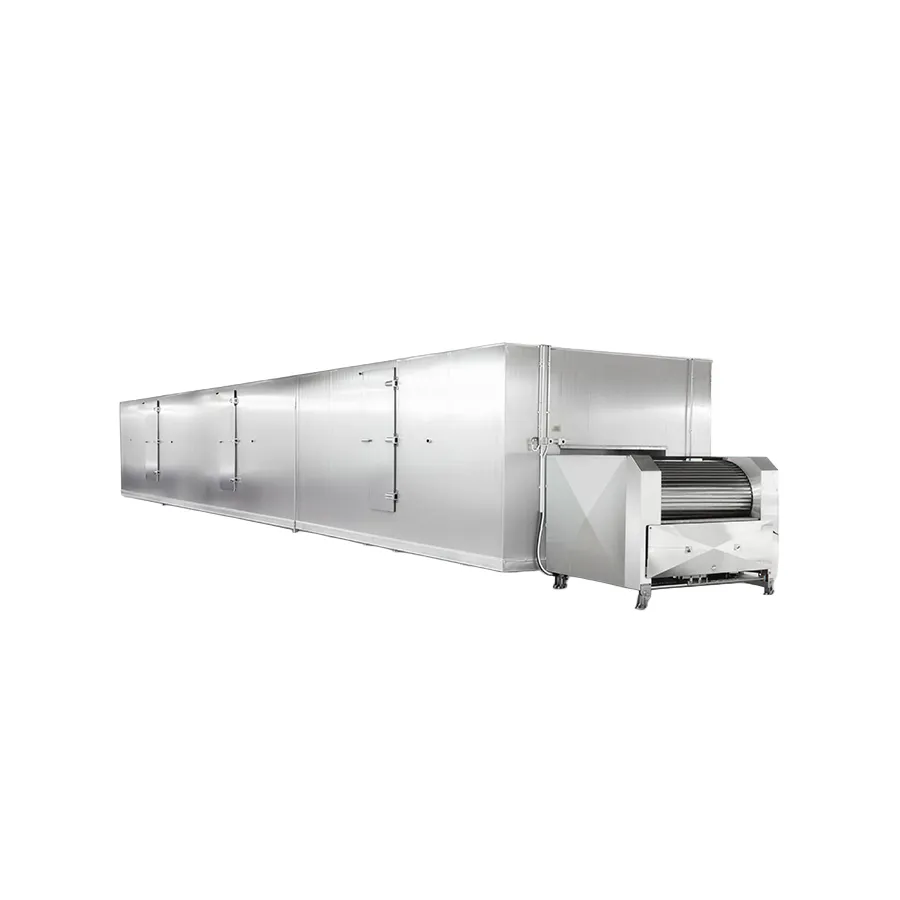
An industrial tunnel freezer is a continuous freezing system that transports products through a refrigerated chamber on a conveyor belt. Cold air circulates around the products, removing heat as they move through the freezing zone.
Compared with separate batch operations, a continuous tunnel freezer can help manufacturers organize a more consistent production flow. It can be connected with forming, cooking, pre-cooling, sorting and packaging processes according to the factory's production arrangement.
Products enter and leave the freezing chamber through a conveyor system.
Operating conditions can be adjusted according to product requirements.
Equipment dimensions and conveying arrangements can be planned for your factory.
The freezing process combines product conveying, low-temperature air circulation and controlled residence time. Each stage contributes to a stable and repeatable production process.
Products are placed evenly on the conveyor before entering the freezing chamber.
Low-temperature circulating air removes heat from the product surface and interior.
Conveyor speed and freezing conditions are configured according to product specifications.
Frozen products leave the tunnel and proceed to packaging or the next production stage.
Important: Freezing time depends on product size, initial temperature, loading density and target core temperature.
The actual operating parameters should be determined through product testing and project-specific technical evaluation.
Different foods require different freezing conditions. Product shape, thickness, moisture content and processing temperature all influence the final equipment configuration.
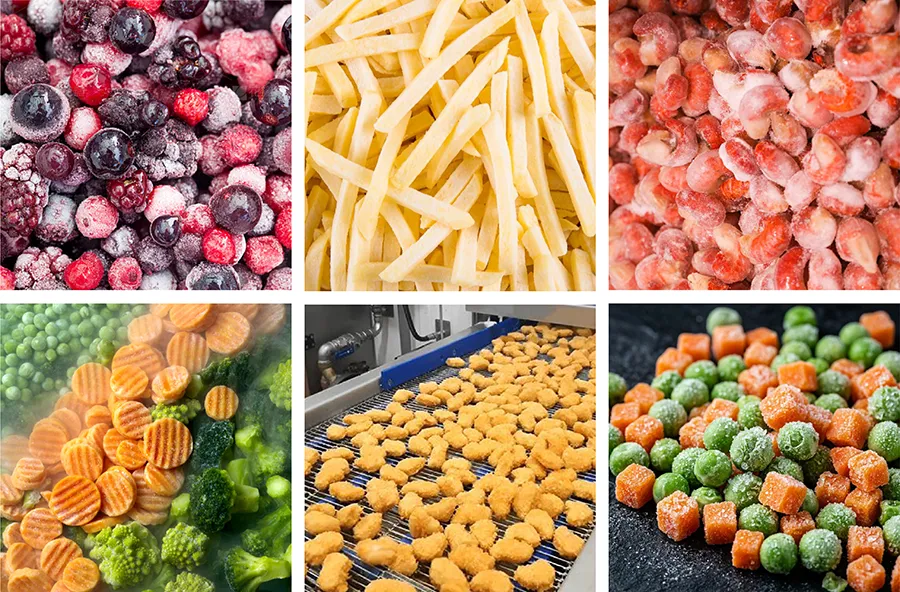
Suitable for evaluating freezing solutions for fish, shrimp, shellfish and other seafood products.
Can be configured for meat pieces, poultry products, formed foods and other processed meat items.
Freezing parameters can be selected according to product size, moisture and desired quality.
Suitable for assessing continuous freezing requirements for ready-to-cook and prepared food products.
Freezing configurations can be evaluated for dough, pastry and selected bakery products.
Final suitability should be confirmed according to the specific product and required freezing result.
IQF stands for Individual Quick Freezing. It is a freezing approach designed to freeze individual food pieces separately rather than forming one large frozen block.
For products such as diced vegetables, seafood pieces and selected prepared foods, an appropriate IQF process can help maintain product separation and make portioning and packaging more convenient.
A tunnel freezer can be configured for suitable IQF applications. The result depends on product characteristics, feeding conditions, airflow, freezing time and the overall process design.
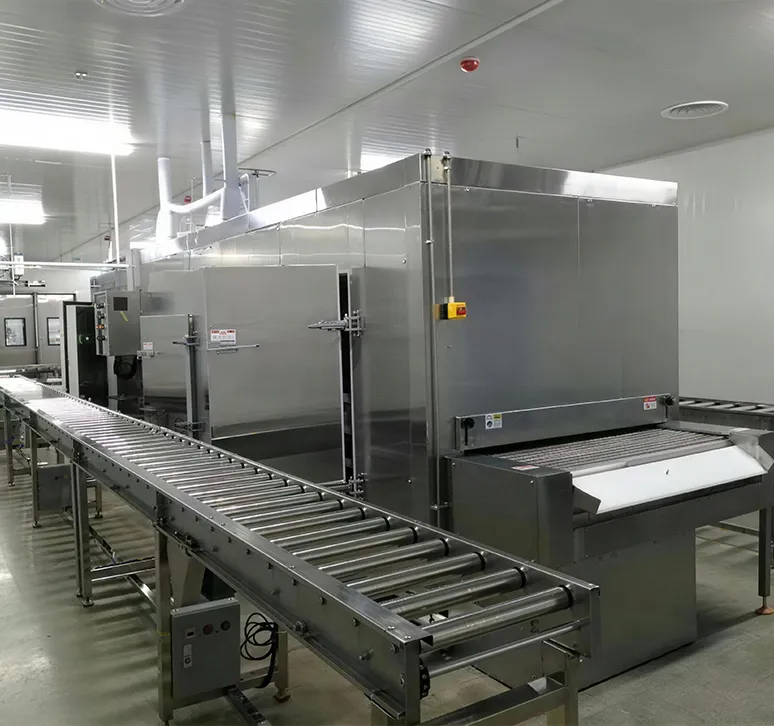
Tunnel and spiral freezers both support continuous food processing, but their conveyor structures and space requirements are different.
Uses a straight conveyor path through a refrigerated chamber. Suitable for continuous production lines where a linear equipment arrangement is practical.
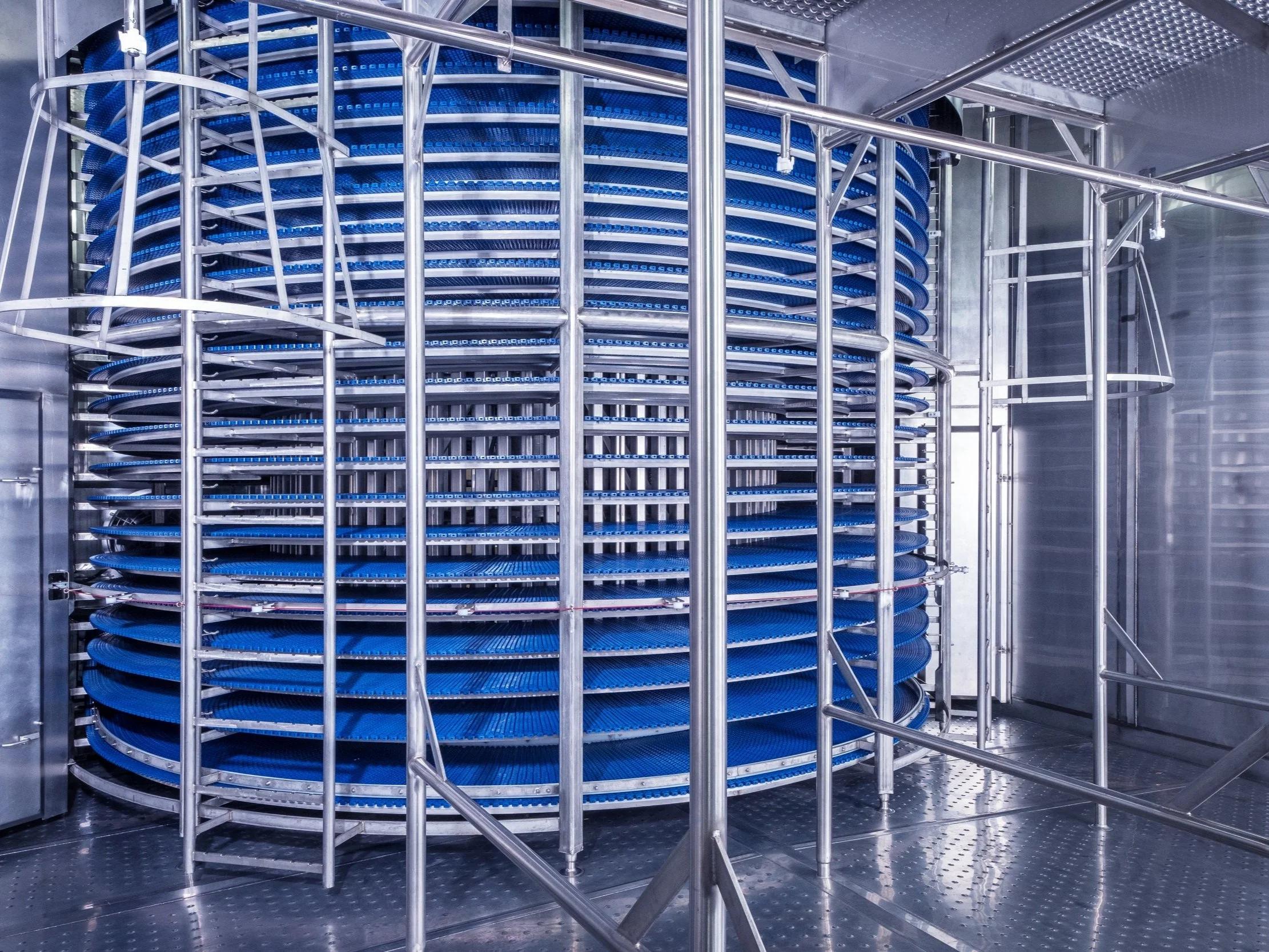
Uses a vertical spiral conveyor to move products through the freezing chamber. Can be considered when floor space and vertical equipment layout are important factors.
The following specifications provide a general reference for tunnel freezer project planning. Actual parameters depend on product characteristics and customer requirements.
Get Detailed Specifications| Machine Type | Industrial Tunnel Freezer |
| Freezing Application | Continuous Freezing / IQF Applications |
| Capacity Range | 100kg/h–3t/h |
| Construction Material | 304 Stainless Steel Options |
| Conveying System | Continuous Conveyor Belt |
| Cooling Method | Mechanical Refrigeration with Forced Air Circulation |
| Temperature Settings | Configured According to Product Requirements |
| Product Applications | Meat, Seafood, Vegetables, Fruits, Prepared Foods |
| Equipment Design | Customized According to Capacity and Factory Layout |
Before requesting a tunnel freezer quotation, prepare the following information. It helps the engineering team evaluate equipment dimensions, refrigeration requirements and production capacity.
Provide the product name, photos, shape, dimensions and average weight per piece.
Confirm the required hourly capacity and daily production schedule.
Provide the incoming product temperature and required final core temperature.
If a specific freezing time is required, provide it for technical evaluation.
Share the factory layout, installation dimensions and conveyor connection requirements.
Confirm site power supply, refrigeration conditions and other relevant operating requirements.
Tell us your product, required capacity and freezing conditions. Foodline can help evaluate a tunnel freezer configuration based on your production process.
More information about industrial tunnel freezers, freezing applications and project requirements.
An industrial tunnel freezer is used for continuous freezing of food products such as meat, seafood, vegetables, fruits and prepared foods. Products move through a refrigerated chamber on a conveyor belt.
Foodline offers tunnel freezer solutions with a reference capacity range of 100kg/h to 3t/h. The actual output depends on the product, feeding conditions and freezing requirements.
Yes, a tunnel freezer can be configured for suitable IQF applications. The product type, individual piece size, loading conditions and freezing process need to be evaluated.
A tunnel freezer generally uses a straight conveyor path, while a spiral freezer uses a vertically arranged spiral conveyor. The choice depends on available space, production capacity and product requirements.
Yes. The equipment layout, conveyor dimensions, capacity and operating configuration can be evaluated according to your product and factory conditions.
Please provide product photos, dimensions, weight per piece, required hourly output, incoming temperature, target core temperature and available installation space.
Food-grade 304 stainless steel can be used for applicable equipment components. The final material configuration should be confirmed according to the project requirements.
The conveying direction, feeding height, discharge position and equipment dimensions can be planned according to the upstream and downstream machinery in your factory.


 5F, Block B, Jingsha Plaza, No.8 Jingguang South Road, Erqi District, Zhengzhou, Henan,
China
 Tel/WhatsApp:+8613783657303



 Email: