

The hotel industry has long been troubled by inefficiencies in the "last 100 meters" of service—specifically, the delivery of takeaways, room amenities (such as towels, toiletries, and drinking water), and other items. The core pain points include excessive manual workload: hotel attendants are often diverted from their primary duties (such as guest check-in and room cleaning) to handle frequent delivery requests, leading to a decline in overall service quality. Nighttime staffing shortages further exacerbate the problem; many mid-range hotels operate with minimal night shifts, resulting in delayed deliveries for guests who request items after midnight, which significantly impacts the guest experience. Additionally, manual delivery suffers from inconsistent efficiency—delivery times vary depending on the attendant's workload and familiarity with the hotel layout, leading to complaints from guests waiting for meals or essential items. Privacy concerns also loom large: manual delivery requires attendants to knock on guest room doors, potentially disrupting guests' rest or private time. These challenges have become major bottlenecks for hotels seeking to improve service quality and operational efficiency, as traditional manual delivery models are inherently limited in scalability and standardization. The launch of the Hotel Delivery Robot addresses these pain points head-on, providing a core solution for hotels' intelligent upgrading.
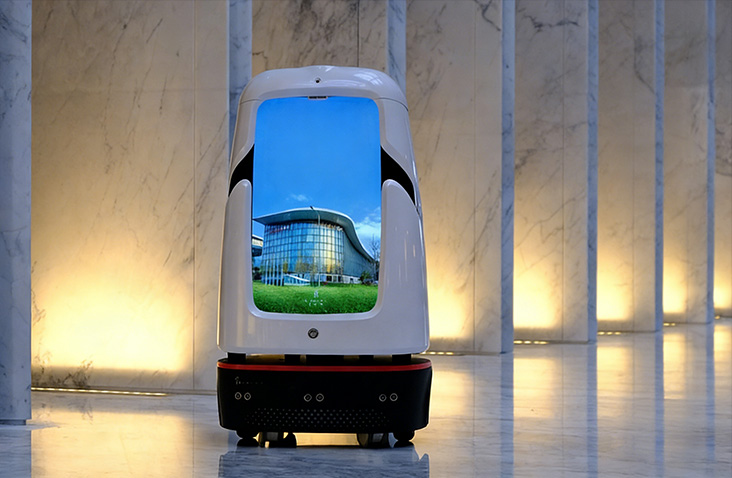
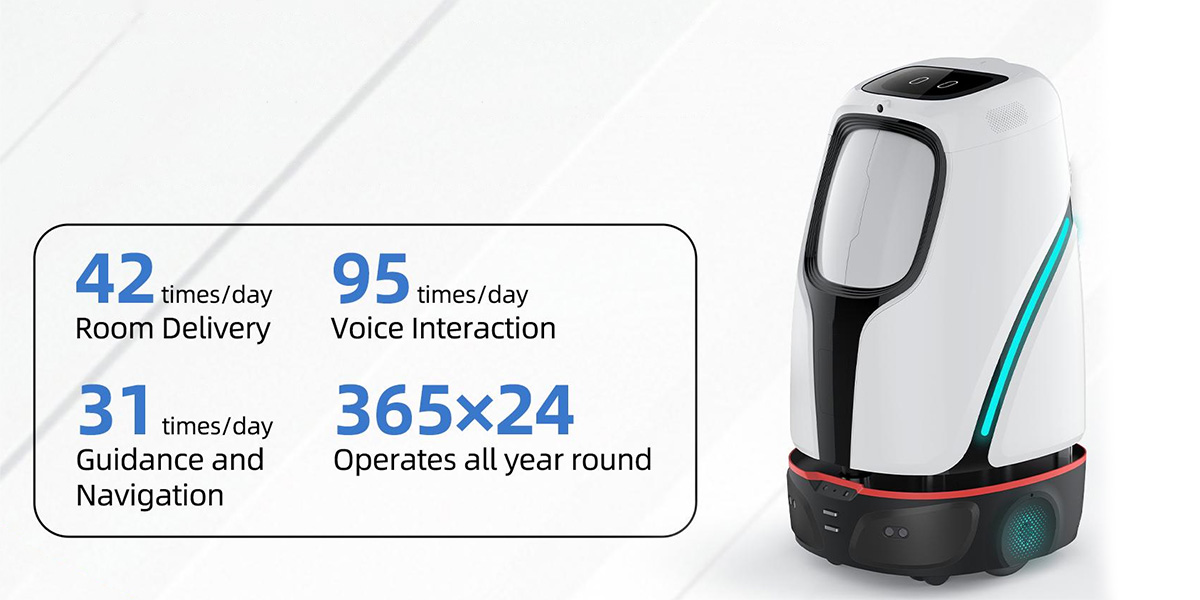
Designed specifically for hotel scenarios, this delivery robot boasts an ultra-strong load capacity of up to 50kg, capable of carrying multiple takeaway orders, large batches of room amenities, or even bulky items such as luggage, eliminating the need for multiple trips. It is equipped with advanced IoT elevator integration technology, which enables seamless communication with the hotel's elevator system— the robot can independently call elevators, select floors, and navigate elevator cabins, achieving fully autonomous cross-floor delivery without any manual intervention. This feature significantly boosts delivery efficiency, with an average delivery time per order reduced by 50% compared to manual delivery. To address privacy and safety concerns, the robot adopts a fully enclosed cabin design, and guests can only open the cabin via password verification (sent to their mobile phones) or direct phone call confirmation with the front desk, realizing contactless delivery that protects guests' privacy and ensures the safety of delivered items. The robot also features an intelligent battery management system: when the battery level falls below 20%, it automatically navigates back to the charging dock for fast charging, supporting 24/7 unattended operation. By taking over all delivery tasks, the robot frees up hotel attendants to focus on core guest services, reducing nighttime staffing requirements and cutting annual labor costs by tens of thousands of yuan. Moreover, the robot's intelligent management system allows hotel managers to track delivery data (such as order quantity, delivery time, and battery status) in real time, enabling data-driven optimization of service processes. For guests, the fast, quiet, and contactless delivery experience enhances their overall stay satisfaction, helping hotels build a competitive edge in the market.


 5F, Block B, Jingsha Plaza, No.8 Jingguang South Road, Erqi District, Zhengzhou, Henan,
China
5F, Block B, Jingsha Plaza, No.8 Jingguang South Road, Erqi District, Zhengzhou, Henan,
China
 Tel/WhatsApp:+8613783657303


 Email: