

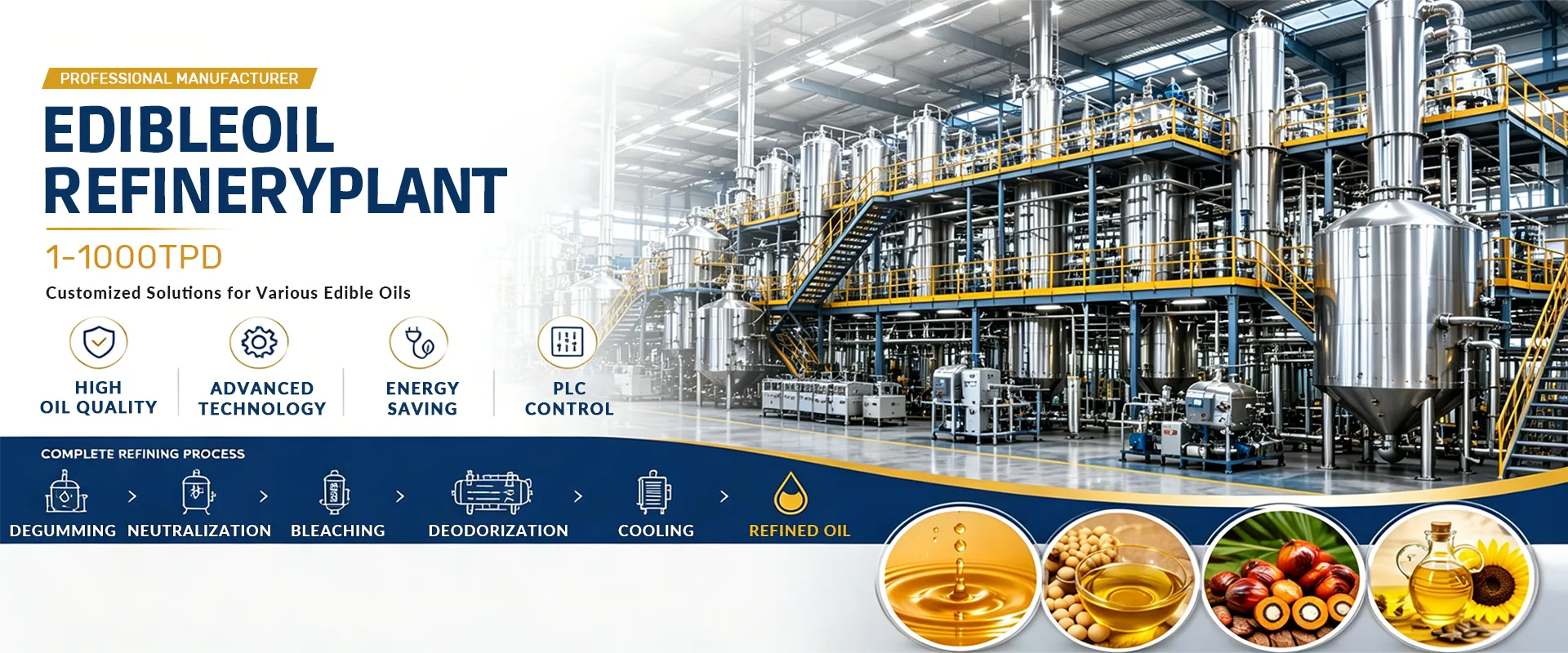
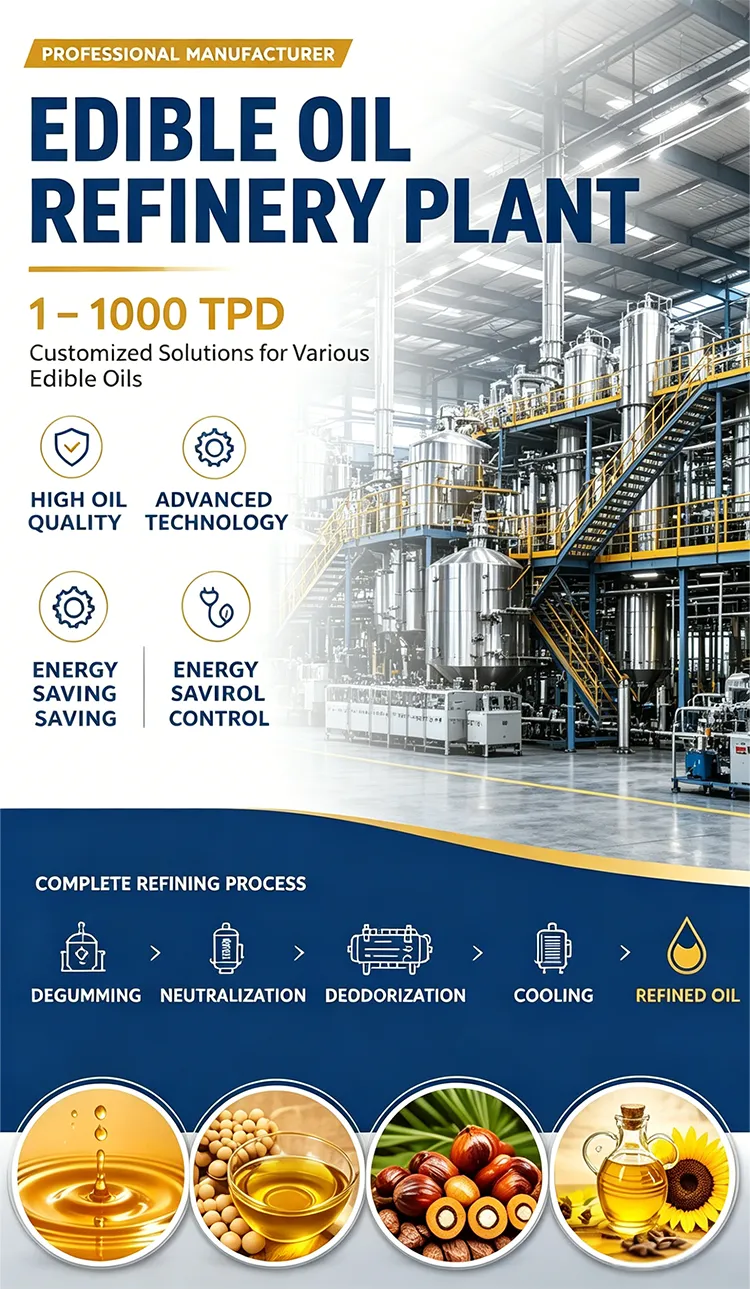
Batch, Semi-Continuous & Continuous Solutions for High-Quality Refined Oils. Customized Design, Energy Saving, and Turnkey Service. Complete edible oil refinery plants from 1-1000 TPD, with advanced automation, energy-saving design, and reliable operation.
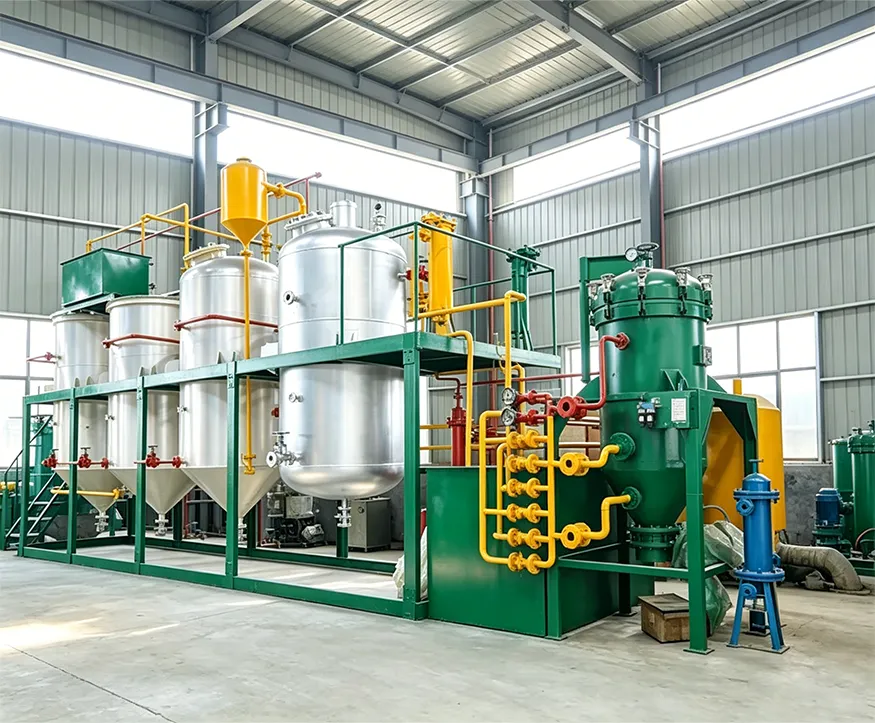
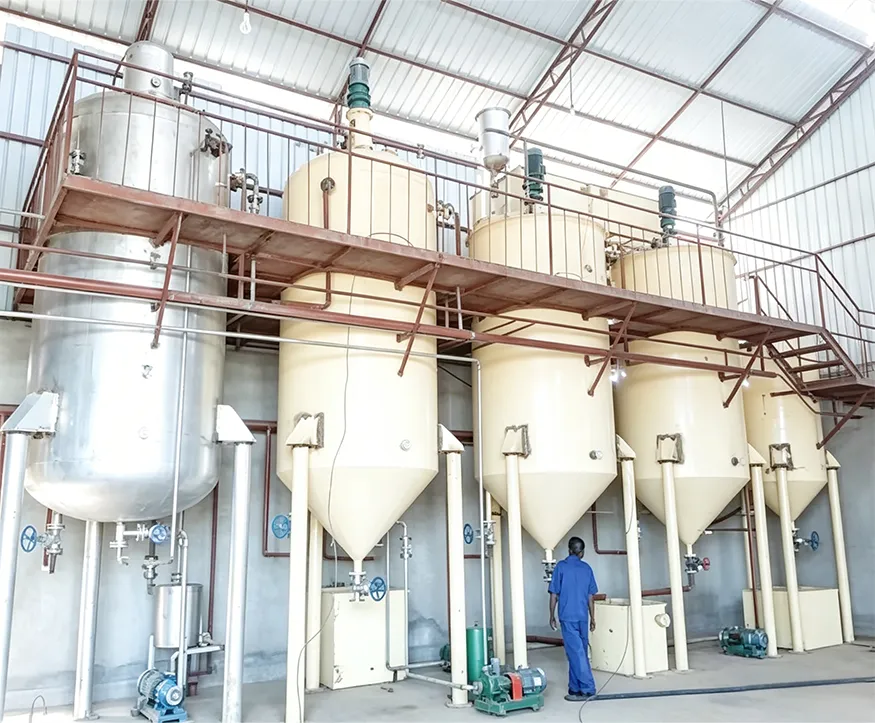
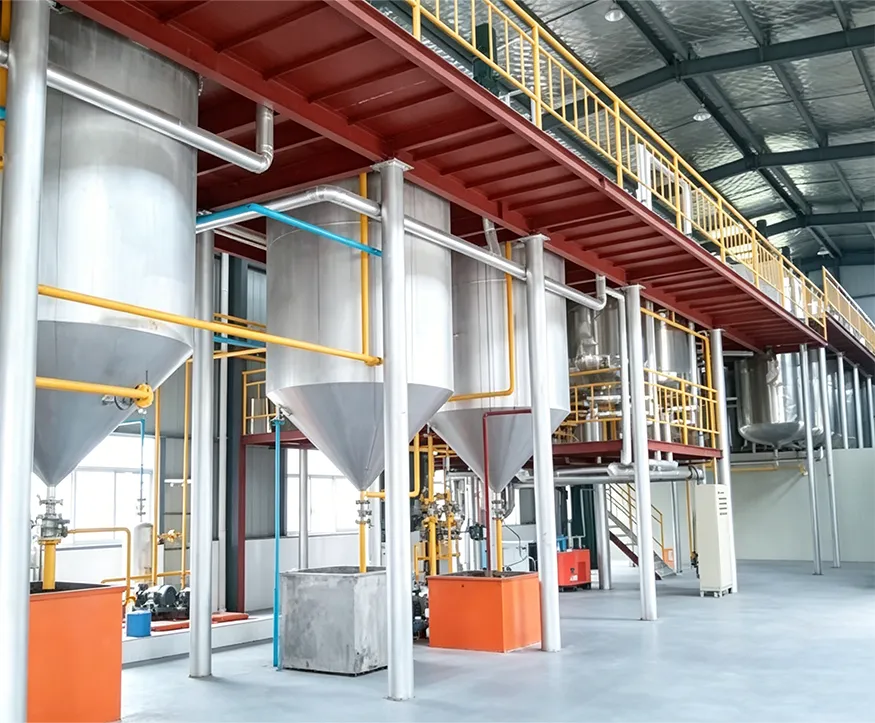
Edible oil refining processes vary depending on the type and level of impurities in the crude oil, as well as the quality requirements of the final refined oil. Foodline Machinery provides customized refining solutions tailored to each customer's raw materials, production goals, and specific needs. In the narrow sense, "oil refining" often refers to the deacidification process. However, a complete refining process may include crude oil pretreatment, degumming, deacidification, bleaching, deodorization, dewaxing, and other purification steps. The exact process is determined by the desired quality standard of the finished oil. Different edible oils require different refining stages. For example, soybean oil, peanut oil, and sesame oil may only require pretreatment and degumming. Cottonseed oil generally requires pretreatment, degumming, and deacidification. Rice bran oil, on the other hand, typically requires a full refining process including pretreatment, degumming, deacidification, bleaching, deodorization, and dewaxing to meet edible oil quality standards.
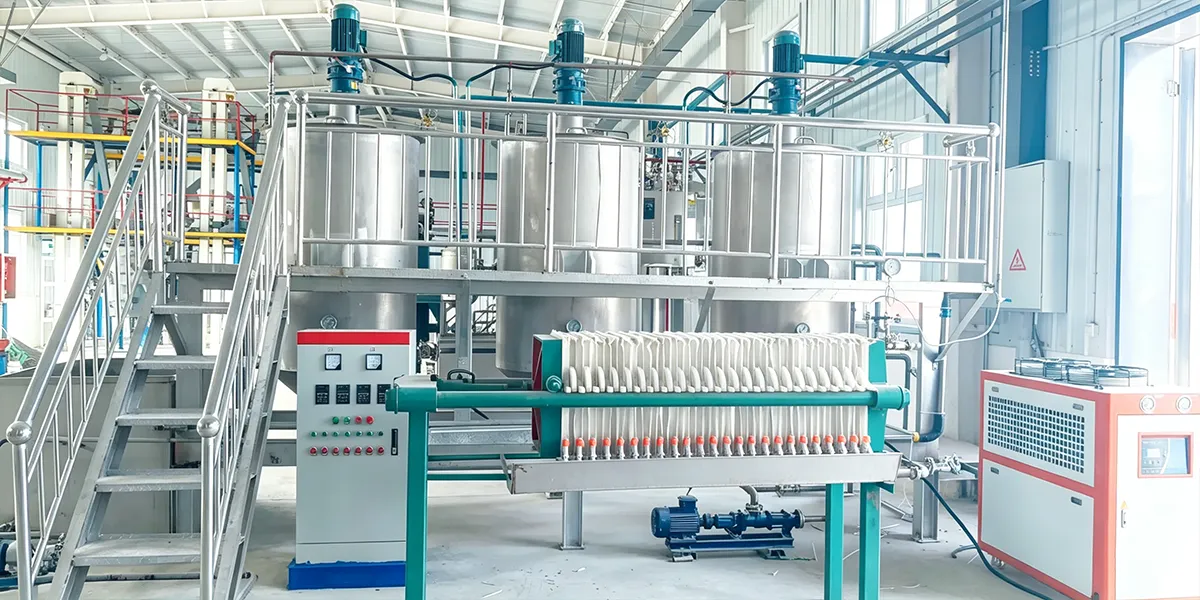
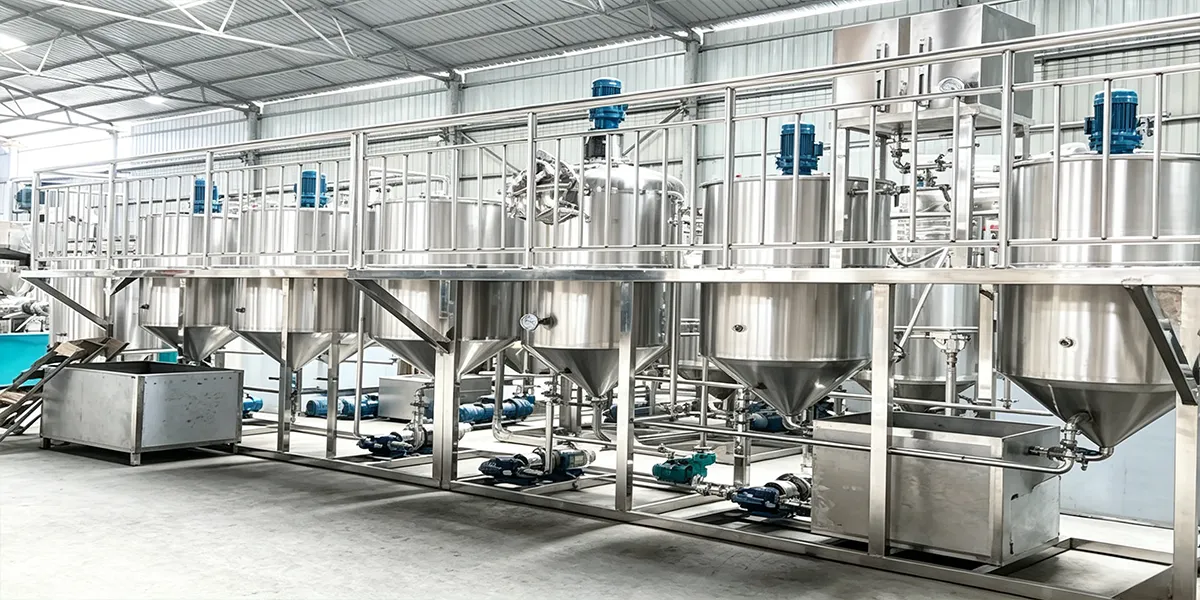
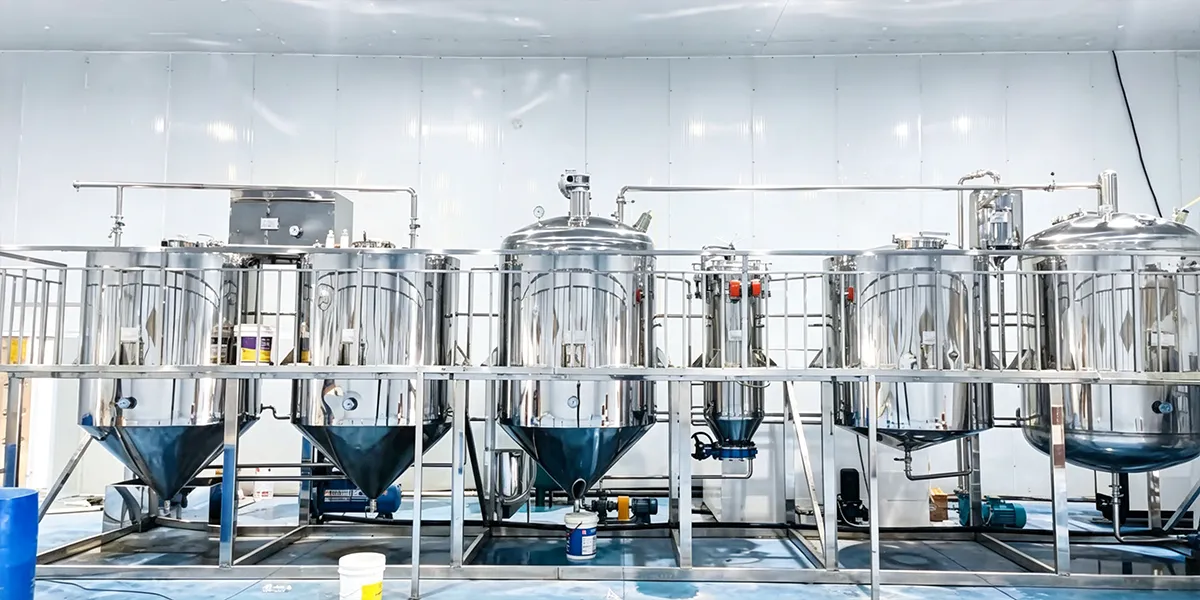
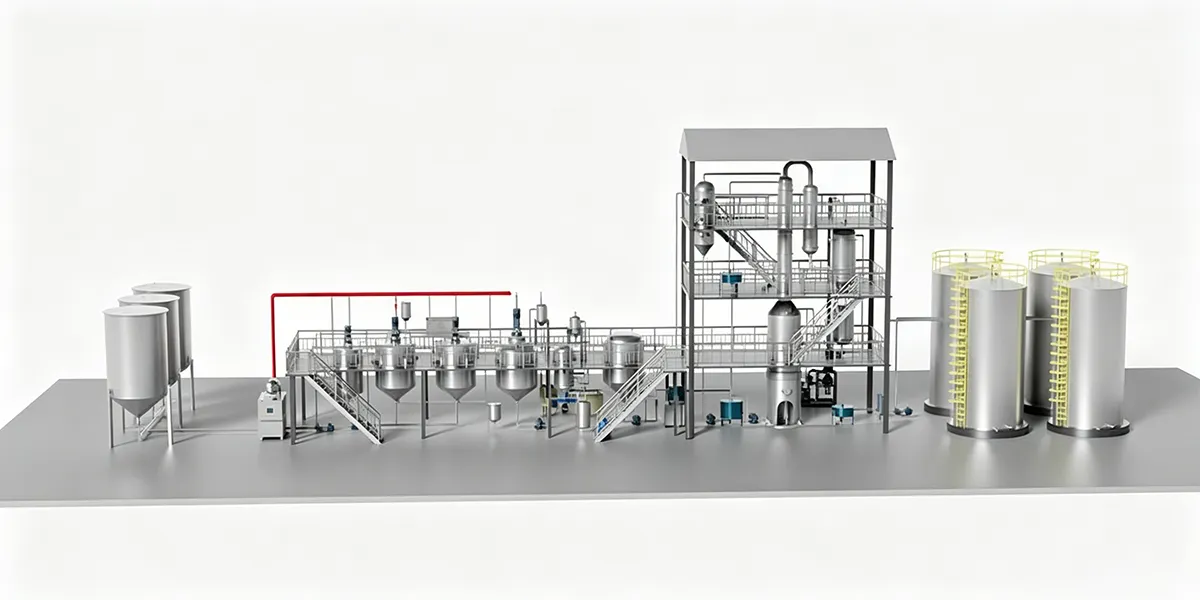
SEMI-CONTINUOUS REFINERY PLANT: normally use for refining 5-30TPD
Features: normally, the degumming and decolorization unitis batch type production; the deacidification and deodorization tower to process continuously. To reach purpose of continuous refining by add other auxiliary equipment, high efficiency, energy saving, economical, and high added output value.
FULL CONTINUOUS REFINERY PLANT: normally ≥30TPD
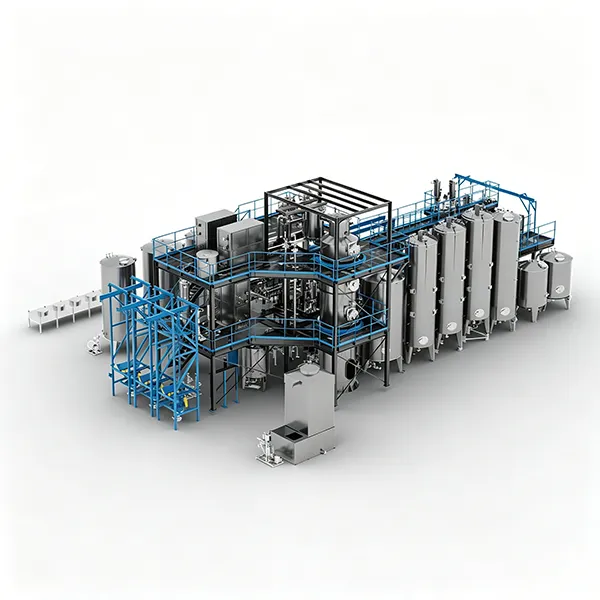
The general oil refining process includes : degumming, deacidification, decolorization and deodorization. All stages of continuous refining are continuous and uninterrupted. This design has these advantages: low production consumption, low oil loss, and more consistent refined oil quality.
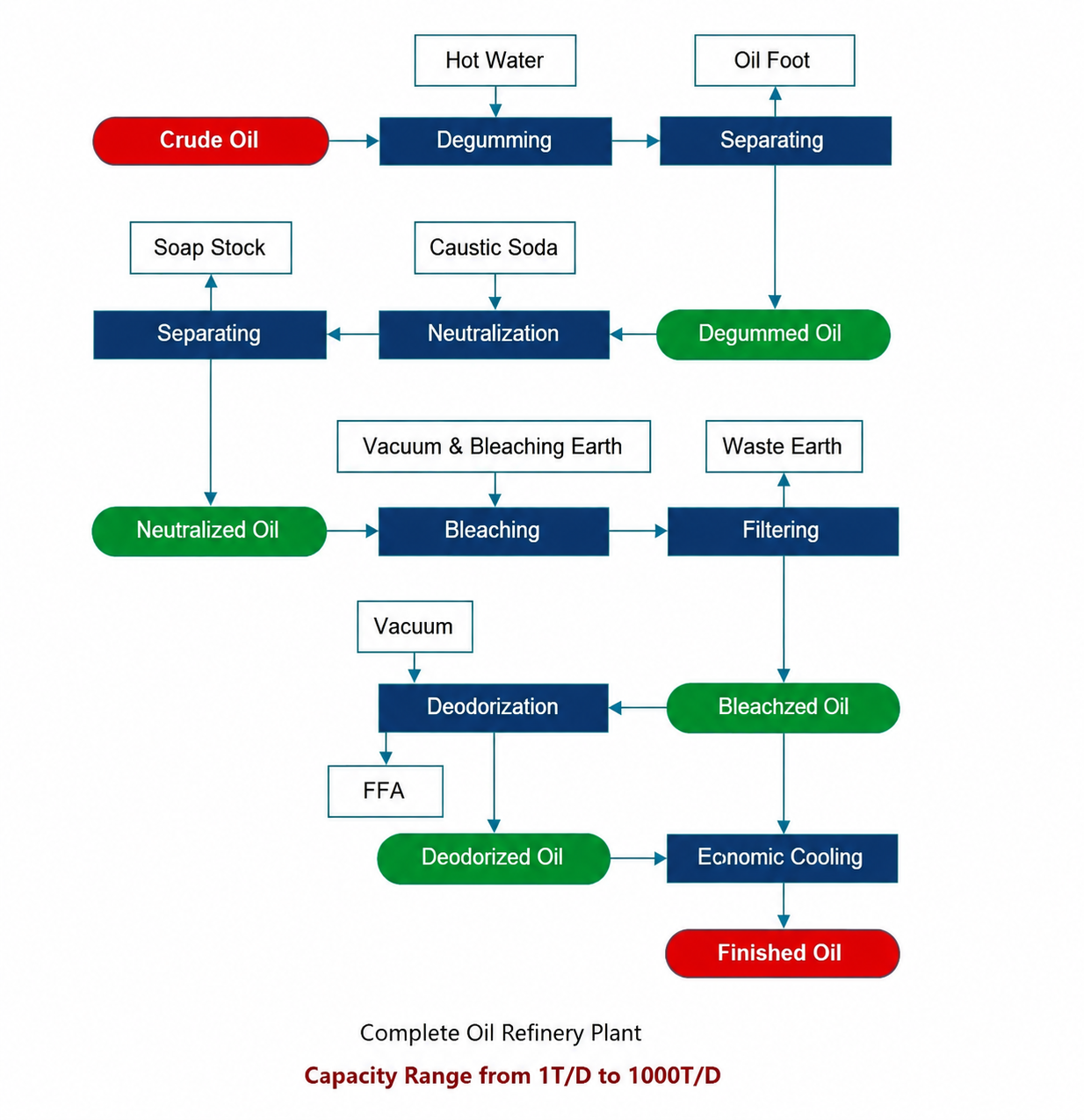
Refining is conducted in a series of steps such as degumming (to remove gums), neutralizing (to remove FFA), bleaching (to remove color), and deodorizing (to remove odor and taste). Every process should be strictly controlled to do well to the next steps.
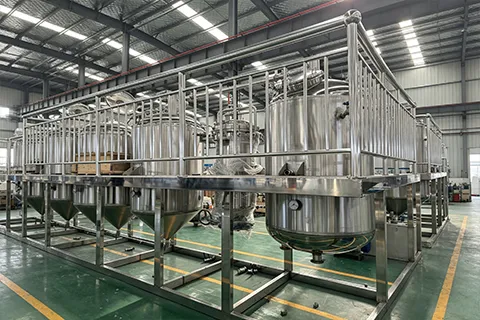
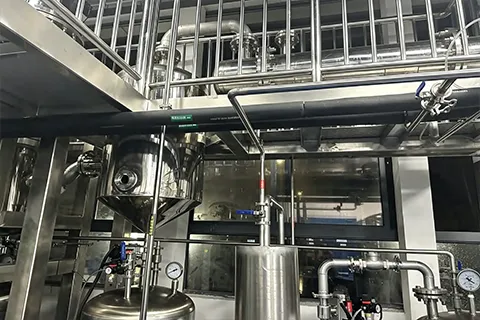
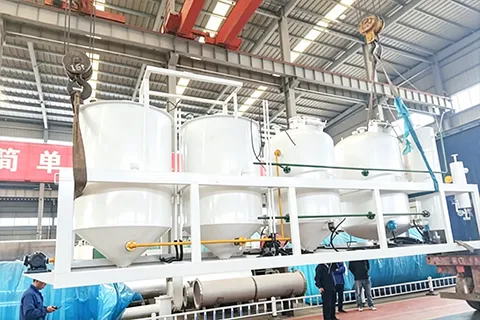
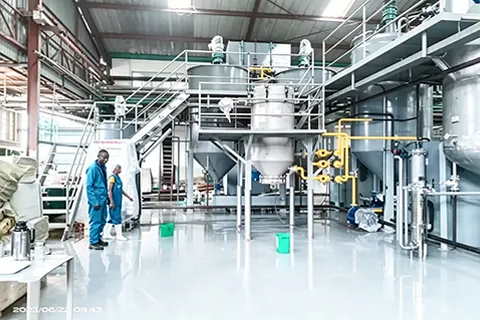
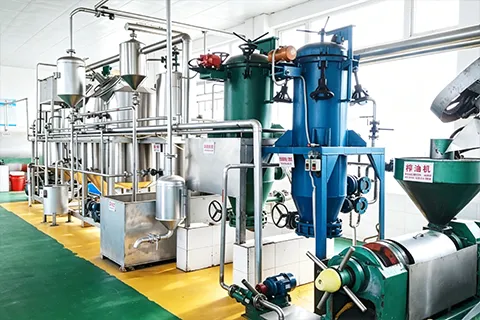
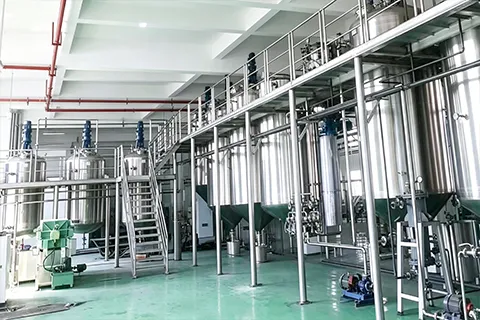
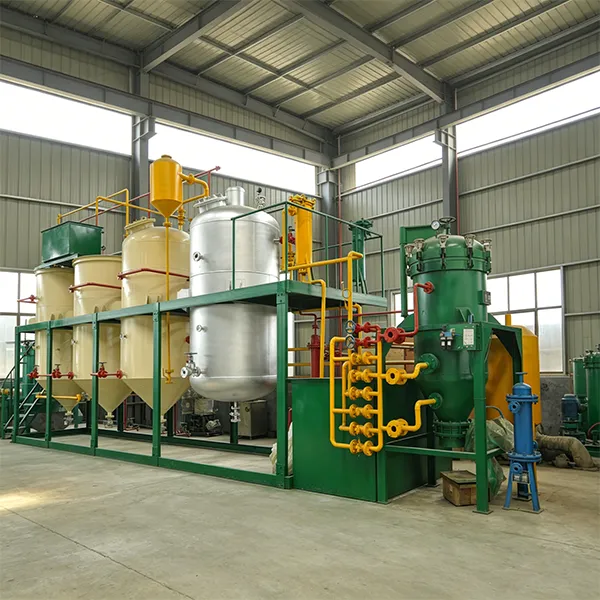
Main Equipment of Edible Oil Refinery Project
Refining Pot: remove the gum, phosphoric acid etc.
Decolorizing Pot: remove the color from neutralized oil
Deodorizing Pot: remove the solvent, smell, water from decolorized oil
Steam Generator: produce steam for the workshop
Heat Conduction Furnace: offer enough heat for the refining sections
Other AuxiliaEquipmentnts: Air compressor, pumps, filters, etc.
Why Refining Edible Oil?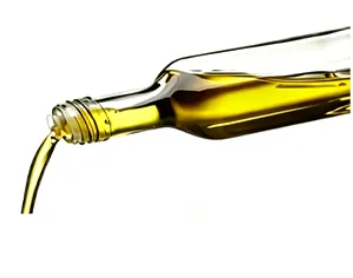
Edible oil refinery caters to people need in pursuing quality life and exports from abroad. Why refine edible oil?
-The oil without refining will give out quite a lot smoke and make people uncomfortable, Refined oil is less smoke
and preserves more authentic flavor.
-Refining mainly atms to purify edible oil by degumming and neutralizing and get high-quality edible oil.
Finished Product Display
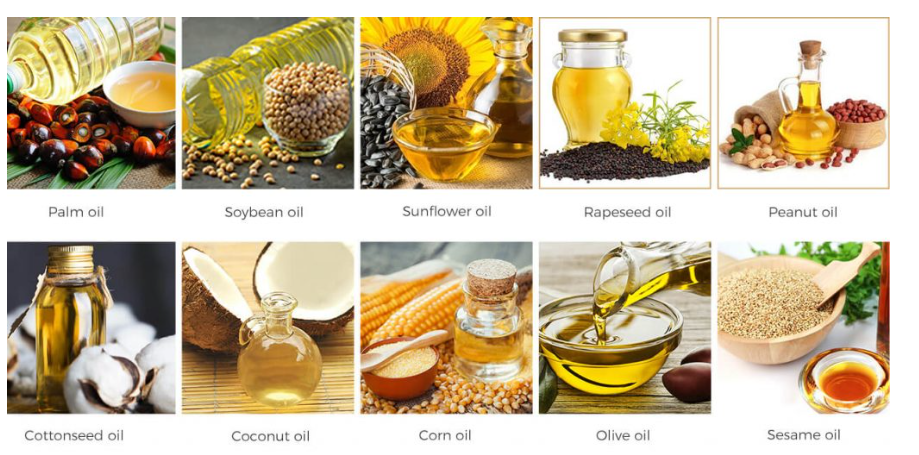
Our Advantages ✅ High Efficiency Production
Advanced refining technology ensures stable performance and higher processing efficiency.
✅ Low Operating Cost
Energy-saving design helps reduce production costs and maximize profits.
✅ Safe & Eco-Friendly
Environmentally friendly refining process with reliable and safe operation.
✅ Customizable Solutions
Tailor-made configurations and capacities to meet different customer requirements.
✅ Automatic Control System
User-friendly automation reduces labor requirements and simplifies operation.
✅ Food-Grade Stainless Steel
Made of high-quality 304/316 stainless steel for durability, hygiene, and long service life.
✅ CE Certified Quality
Manufactured in compliance with international standards for global market requirements.
✅ Precise Refining Performance
Effectively removes impurities, odor, pigments, and free fatty acids to produce premium edible oil.
✅ Less Waste, More Profit
Optimized refining process minimizes oil loss and improves overall yield.


 5F, Block B, Jingsha Plaza, No.8 Jingguang South Road, Erqi District, Zhengzhou, Henan,
China
5F, Block B, Jingsha Plaza, No.8 Jingguang South Road, Erqi District, Zhengzhou, Henan,
China
 Tel/WhatsApp:+8613783657303



 Email: