

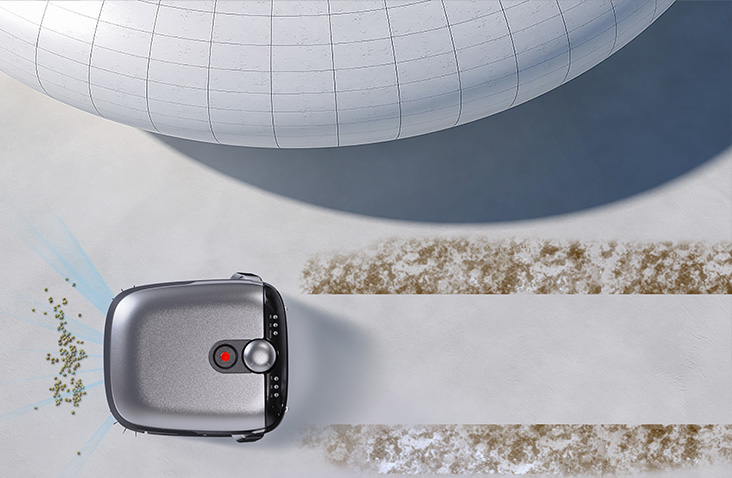
Commercial scenarios such as factories, shopping malls, office buildings, and airports face unique and complex cleaning challenges that have long been difficult to resolve with traditional manual cleaning. The primary pain points include enormous cleaning areas and heavy tasks—large shopping malls and factories often cover tens of thousands of square meters, requiring teams of cleaners to work overtime to complete daily cleaning, resulting in extremely high labor costs. Moreover, manual cleaning is prone to inconsistent quality; cleaning standards vary among staff, leading to missed spots (such as corners, under equipment, and along baseboards) and subpar cleaning results, which can damage the venue's image. High-risk areas, such as factory production lines with oil stains, high-altitude areas in shopping malls, or wet floors in airports, pose significant safety hazards for manual cleaning, increasing the risk of workplace accidents and potential liability for enterprises. Additionally, cleaning during business or production hours can disrupt normal operations—loud cleaning equipment and staff movement can annoy shoppers, disturb office workers, or interfere with factory production. These issues make traditional cleaning models inefficient, costly, and risky, failing to meet the modern commercial sector's demands for cost reduction, efficiency improvement, and safety. The launch of the Commercial Cleaning Robot has completely revolutionized traditional cleaning methods, ushering in a new era of intelligent, efficient, and safe cleaning.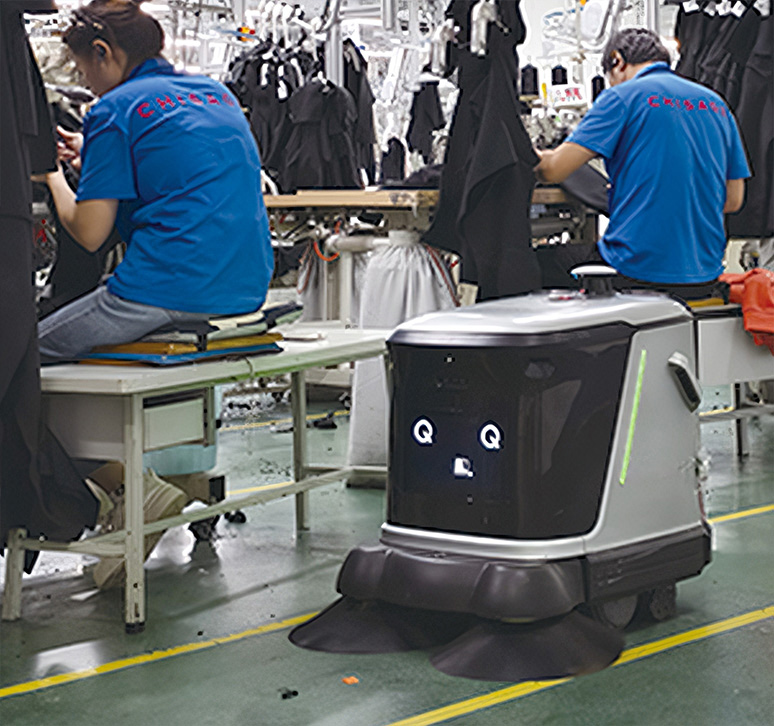
Equipped with advanced 3D LiDAR navigation and SLAM algorithm technology, this Commercial Cleaning Robot can quickly scan and map the entire cleaning area with millimeter-level precision, automatically planning the optimal cleaning path to avoid repeated cleaning and missed spots. Its 0cm edge-cleaning design allows the robot to hug walls tightly, easily reaching corners, baseboards, and gaps under equipment that are inaccessible to manual cleaning, achieving a cleaning coverage rate of over 99%. The robot is equipped with a high-power suction system and a heavy-stain cleaning module, capable of effectively removing stubborn dirt, oil stains, and dust in factory workshops, as well as foot traffic marks in shopping malls. It supports multiple cleaning modes (including vacuuming, mopping, sweeping, and disinfection) and is compatible with various floor materials such as tile, wood, carpet, and concrete, adapting to the diverse needs of different commercial scenarios. To address the issue of operational disruption, the robot adopts a low-noise design (operating at less than 55 decibels), enabling it to work quietly during business or production hours without disturbing customers, employees, or production lines. It also features a full set of intelligent autonomous functions: automatic charging when the battery is low, automatic water refilling and drainage (when paired with a dedicated base station), and scheduled cleaning (which can be set via a mobile app or management platform). The integrated digital management backend allows enterprise managers to monitor the robot's cleaning progress, battery status, and maintenance needs in real time, realizing full-process visualization and standardized management of cleaning work. Practical tests show that one Commercial Cleaning Robot can replace 6-8 full-time cleaners, reducing annual labor costs by hundreds of thousands of yuan. Additionally, it improves cleaning efficiency by 300% compared to manual cleaning and ensures consistent cleaning quality, significantly reducing the risk of safety accidents in high-risk areas. For enterprises, this robot not only cuts costs and improves efficiency but also enhances the venue's cleanliness and professional image, creating a better environment for customers and employees.


 5F, Block B, Jingsha Plaza, No.8 Jingguang South Road, Erqi District, Zhengzhou, Henan,
China
5F, Block B, Jingsha Plaza, No.8 Jingguang South Road, Erqi District, Zhengzhou, Henan,
China
 Tel/WhatsApp:+8613783657303



 Email: